
Sign up for our Newsletter
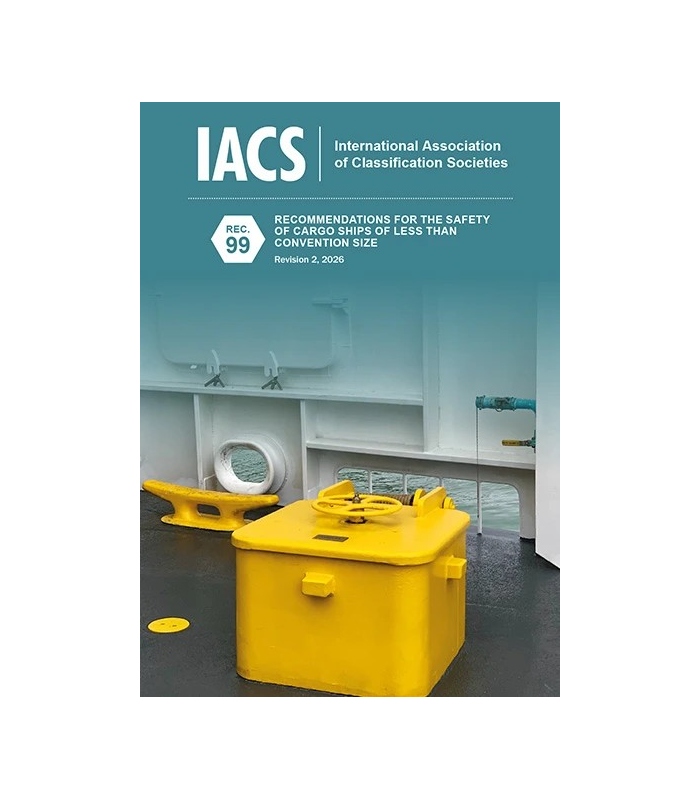

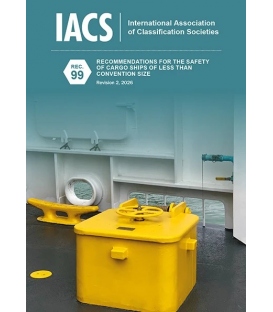
e-Reader: Recommendations for the Safety of Cargo Ships of less than Convention Size (Rec.99) (2026)
*** Witherby digital products are for use on the WitherbyConnect platform.
*** All e-Book sales are final (no returns or exchanges)!
*** After purchasing, a link and access code will be e-mailed to you.
e-Reader: Recommendations for the Safety of Cargo Ships of less than Convention Size (Rec.99) (2026)
Detailed Overview
Introduction
Cargo ships of less than 500 GT (except ships down to 300 GT with respect to radio-communication) are not covered by the SOLAS Convention, and there exist no uniform regulations or guidance that provides an internationally accepted level of safety for such ships.
As in the SOLAS Convention, a cargo ship is any ship which is not a passenger ship. Smaller ships, due to a combination of their size and constant exposure to coastal hazards, are particularly vulnerable and therefore careful consideration should be given to all aspects of their safety.
Fishing vessels are not part of these Recommendations. For fishing vessels equal or greater than 24 m in load line length, reference is made to the Cape Town Agreement of 2012 entering into force on 27th February 2027, which updates, amends, and replaces the Torremolinos International Convention for the Safety of Fishing Vessels. Fishing vessels less than 24 m in length are generally covered by the requirements as specified by the Administration.
The purpose of these Recommendations is to provide a general code of safe practice applicable to cargo ships of less than convention size which are engaged on international voyages, in particular for fire protection, detection and extinction, safety equipment, radio installations and navigational equipment. For ships not engaged on international voyages, some of the Recommendations may be exempted or omitted if considered impracticable or not reasonable. The Administrations may develop their national requirements for ships not engaged on international voyages on the basis of these Recommendations.
The Recommendations are intended to be applied by the IACS Member Societies, with the consent of the Administration concerned, where no national regulations exist.
It is recognised that the Recommendations are used as a basis for contract specifications by builders and owners, but care should be taken to ensure an appropriate level of safety, having regard to both the type and service area of the ships involved. Ships engaged on coastal voyages may encounter widely varying weather and sea conditions depending upon the geography of the area involved and the advice of the Classification Society should be sought in all cases when applying the Recommendations.
Materials and equipment specified in these Recommendations should be of an approved type in accordance with national or international requirements.
Contents Listing
CHAPTER I - General Provisions
1. Application
2. Definitions
3. Surveys and Maintenance
CHAPTER II - Load Lines
1. Load Line Recommendations
CHAPTER III - Intact Stability
1. Application
CHAPTER IV - Fire Fighting
Section 1 Fire Pumps and Fire Main Systems
Section 2 Fire Safety Measures
Section 3 Fixed Fire Detection and Fire Alarm Systems
Section 4 Fire Extinguishing Arrangements
Section 5 Fire Fighting Equipment
Section 6 Additional Fire Safety Measures for Tankers
Section 7 Alternative Design and Arrangements
Section 8 Fire Extinguishing Recommendations for Ships not Fitted with Propulsion Machinery
CHAPTER V - Life Saving Appliances
CHAPTER VI - Radio Installations
CHAPTER VII - Navigational Equipment
CHAPTER VIII – Prevention of Collisions
CHAPTER IX - Safety for Ships Using Gases or Low-flashpoint Fuels
About the Author
Dedicated to safe ships and clean seas, IACS makes a unique contribution to maritime safety and regulation through technical support, compliance verification and research development. More than 90% of the world?s cargo carrying tonnage is covered by the classification design, construction and through-life compliance rules and standards set but the twelve Members Societies of IACS.
IACS is a not for profit membership organisation of classification societies that establish minimum technical standards and requirements that address maritime safety and environmental protection and ensures their consistent application. It carries out this responsibility through its panels, expert groups and project teams and provides a Quality System Certification Scheme (QSCS) that its Members comply with, as an assurance of professional integrity and maintenance of high professional standards. IACS is recognized as the principle technical advisor of IMO.
http://www.iacs.org.uk/